
Autism
Autism
An autism diagnosis may come in the early years or in the middle of secondary school, for a son or a daughter, and some children are recognised quickly while others are missed for years. These pages are for the parent learning the particular way her child’s brain works, and for the conversation with the school that follows.
What the library says about this, on one page. It is also online at theparentbook.com/help/autism
What to do first
An autistic child isn’t a broken version of a neurotypical one. An assessment is there to explain her to the people around her, and to unlock what she’s entitled to.
- Reduce the sensory demands in the parts of the day that go worst. Noise, light, moving between activities and unexpected change usually affect her more than anyone realises.
- Ask the school for a SENCo meeting, and ask what they’ve recorded.
- See the GP for the referral, and expect a long wait. Support doesn’t have to wait for the letter.
Some tips to try
Short pieces from the library, and a first thing to try from each.
-
Plan B, Agreed in Advance.
For an autistic child, a change she has heard about in advance is easier to manage, so build a plan B into every plan.
- Tell her about changes as soon as you know about them.
-
Telling Her She Is Autistic.
Start soon after the diagnosis, say a little at a time in words that fit her age, and treat it as the first of many conversations.
- Start soon after the diagnosis, and give a little information at a time.
-
The Supermarket That Is Too Much.
Plan supermarket trips so you leave before the noise and lights become too much for her.
- Plan the trip so you leave before she reaches her limit.
The rest of each tip, with more to try and why it works, is in the library.
If you want to read further
- Neurodiversity, and the Conversation with the School. For parents whose child has been working harder and longer than other children to do things that come more easily to them. theparentbook.com/reader/neurodiversity-and-the-conversation-with-the-school
Worth your time
- A book for you: Autism and Asperger Syndrome in Childhood, Luke Beardon. Written for the weeks after a diagnosis, this short book explains autism as a different way of being and offers Beardon’s ‘golden equation’: autism plus environment equals outcome. uk.bookshop.org/p/books/autism-and-asperger-syndrome-in-childhood-for-parents-and-carers-of-the-newly-diagnosed-luke-beardon/a4ad5ecf780a0882
- A book to read together: I See Things Differently: A First Look at Autism, Pat Thomas. A clear, kind introduction to autism for young children: how an autistic child may experience noise, change and friendship, and how others can help. Works for an autistic child and for siblings and classmates. uk.bookshop.org/p/books/a-first-look-at-autism-i-see-things-differently-pat-thomas/1e1fb827d1392bc3
- Something to watch: What is autism?, National Autistic Society, YouTube. The National Autistic Society’s own short explainer on autistic characteristics and how they show up differently in different people’s everyday lives. A sound first stop after a diagnosis. www.youtube.com/watch?v=WLx9jyxJaRw
- Something to listen to: 1800 Seconds on Autism, Robyn Steward and Jamie Knight (BBC). A BBC podcast presented by autistic hosts, talking in half-hour episodes about meltdowns, sensory overload, routines, bullying and diagnosis from the inside. Helpful for parents and for autistic teenagers themselves. podcasts.apple.com/gb/podcast/1800-seconds-on-autism/id1444057570
Who else can help
Assessment usually begins at school rather than at the surgery. The GP is the referral route, but a school that has already tried and recorded support makes everything after it faster.
- The SENCo at your child’s school. The member of staff responsible for special educational needs. They hold the assessment routes, the in-school support, and the paperwork an EHCP needs. Ask for a meeting in writing, and ask what is already being tried under the graduated approach. This conversation usually has to happen before anything statutory can.
- Your local SENDIASS. The free, impartial SEND information, advice and support service every local authority in England must provide: SEN support, EHC needs assessments, exclusions, and what to do when you and the school disagree. As soon as special educational needs are in the picture. Search your borough’s name with SENDIASS, or use the national finder. councilfordisabledchildren.org.uk/about-us-0/networks/information-advice-and-support-services-network/find-your-local-ias-service
- National Autistic Society. The UK’s autism charity. A large advice hub, a directory of autism services near you, an online community, and a one-off support call from another parent of an autistic child, arranged through the website. From the first suspicion through assessment and after. There is no phone helpline to ring; the parent-to-parent call takes up to twelve working days to arrange. No phone helpline. The parent-to-parent call is arranged online and can take up to twelve working days. By arrangement, requested through the website · Parent to Parent Emotional Support Helpline: confidential one-off call staffed by parents of autistic children; arranged via the website. www.autism.org.uk/what-we-do/help-and-support
- SENDIASS (your local SEND information and advice service). Every local authority in England funds a free, impartial advice service for parents of children with special educational needs: SEN support, EHC assessments and plans, exclusions, and disagreements with the school. Most offer a phone line, email and drop-ins. Before anything statutory. Search your borough’s name with SENDIASS, or use the national finder. England. Each local authority runs its own; the finder lists them all. councilfordisabledchildren.org.uk/about-us-0/networks/information-advice-and-support-services-network/find-your-local-ias-service
- Contact (for families with disabled children). The charity for families with a disabled child, whether or not there is a diagnosis yet. A free helpline, webchat, benefits advice and local groups. In the early days after a diagnosis, or while you are still waiting for one, when you need someone warm and practical. Contact Helpline 0808 808 3555 · Mon-Fri 9.30am-5pm (Tue opens 10.15am) · Webchat and an online enquiry form via the website; bookable Listening Ear calls contact.org.uk/help-for-families/information-advice-services/our-helpline
The full list for autism, with what each organisation does and when it is the right call, is at theparentbook.com/help/autism/services
Published by Kensington Square Therapy. Company No. 16707111. Written by therapists registered with the British Association for Counselling and Psychotherapy (BACP) and the National Counselling and Psychotherapy Society (NCPS). This page is not therapy, and not a substitute for professional support. The full library is at theparentbook.com.
Everything the library holds on autism
Go further
Quick tips
- Plan B, Agreed in AdvanceFor an autistic child, a change she has heard about in advance is easier to manage, so build a plan B into every plan.
- Telling Her She Is AutisticStart soon after the diagnosis, say a little at a time in words that fit her age, and treat it as the first of many conversations.
- The Supermarket That Is Too MuchPlan supermarket trips so you leave before the noise and lights become too much for her.
- The Eldest Child You Are Wondering AboutWhen a younger child is assessed, parents often start to see the same patterns in the eldest.
- When the Diagnosis Comes at SixteenA diagnosis at sixteen often brings a teenager more relief than her parents expected.
Quick tips open with a subscription.
To print
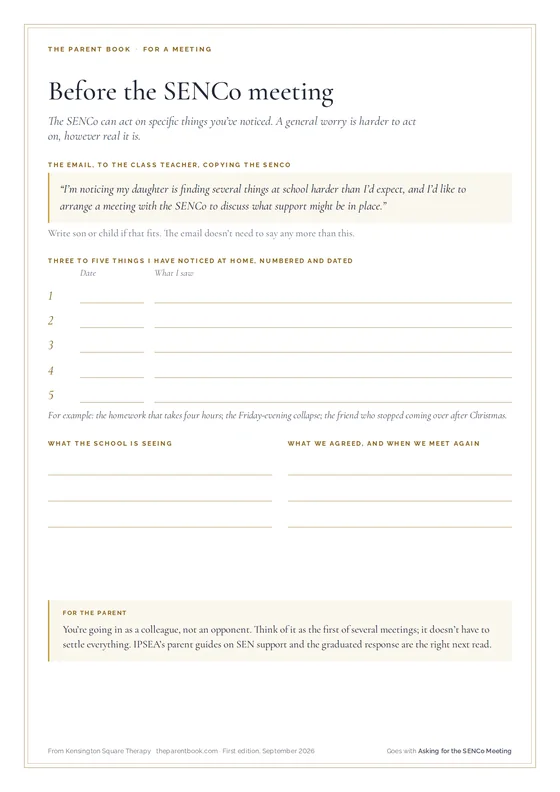 Before the SENCo meeting
For a meeting · A4 · PDF, 65 KB · Free
Before the SENCo meeting
For a meeting · A4 · PDF, 65 KB · Free
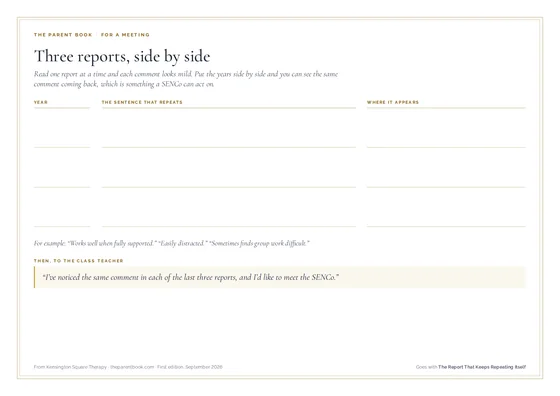 Three reports, side by side
For a meeting · A4 landscape · PDF, 47 KB · Free
Three reports, side by side
For a meeting · A4 landscape · PDF, 47 KB · Free
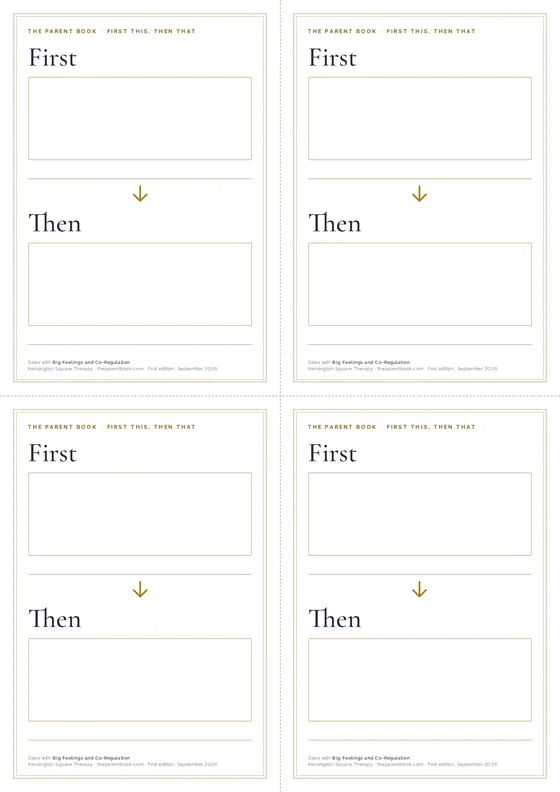 First this, then that
Cards to cut out · A4, four cards to cut, two sides · PDF, 64 KB · With a subscription
First this, then that
Cards to cut out · A4, four cards to cut, two sides · PDF, 64 KB · With a subscription
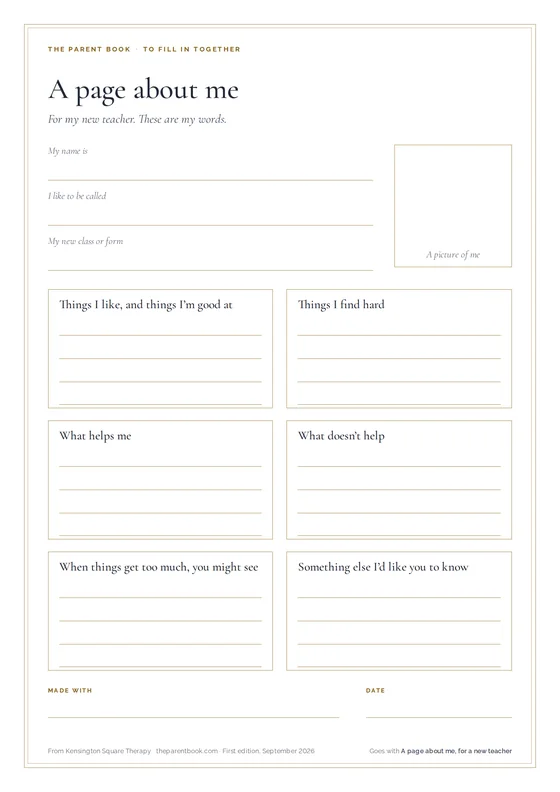 A page about me
To fill in together · A4, two pages · PDF, 67 KB · With a subscription
A page about me
To fill in together · A4, two pages · PDF, 67 KB · With a subscription
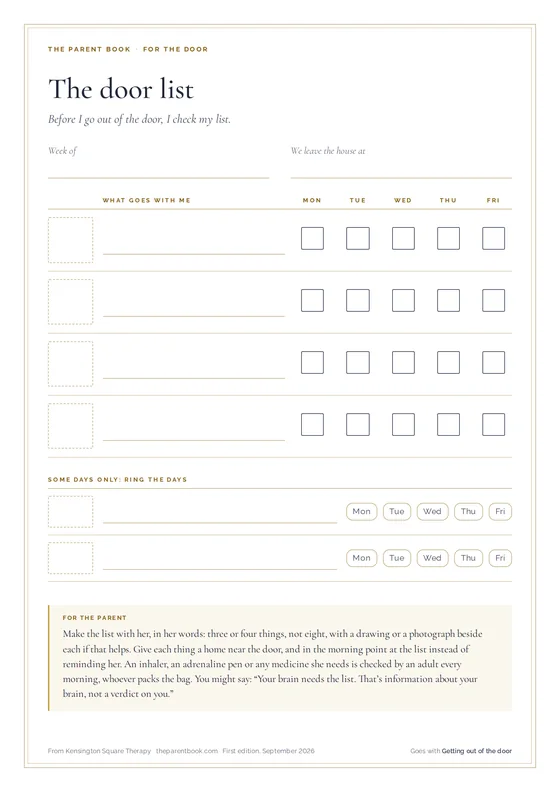 The door list
For the door · A4 · PDF, 74 KB · With a subscription
The door list
For the door · A4 · PDF, 74 KB · With a subscription
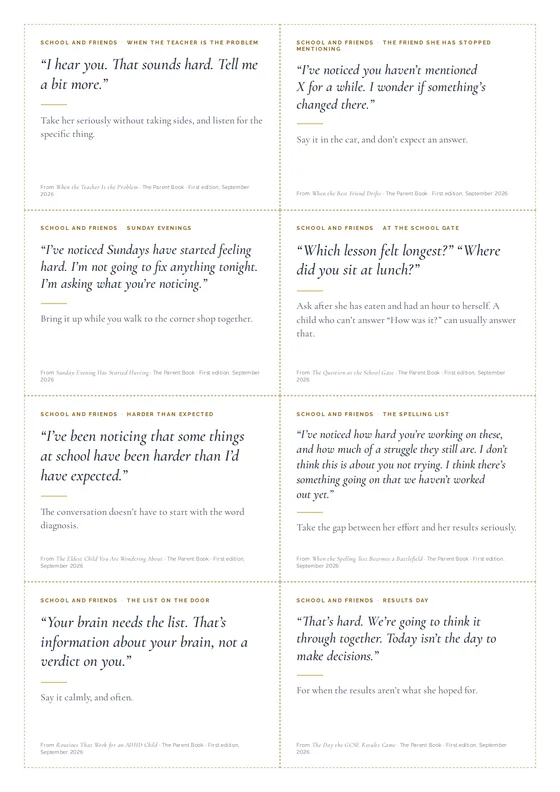 What to say: school and friends
Cards to cut out · A4, eight cards to cut · PDF, 63 KB · Free
What to say: school and friends
Cards to cut out · A4, eight cards to cut · PDF, 63 KB · Free